
February 2026 Update: AI Experiments, Open Source & rs-tunnel
In February 2026, we doubled down on open source, launched a new YouTube series, and pushed deeper into AI-assisted engineering workflows, testing Codex and Claude by building real projects like a SpaceX rocket simulator.
Hashir Baig—Founder
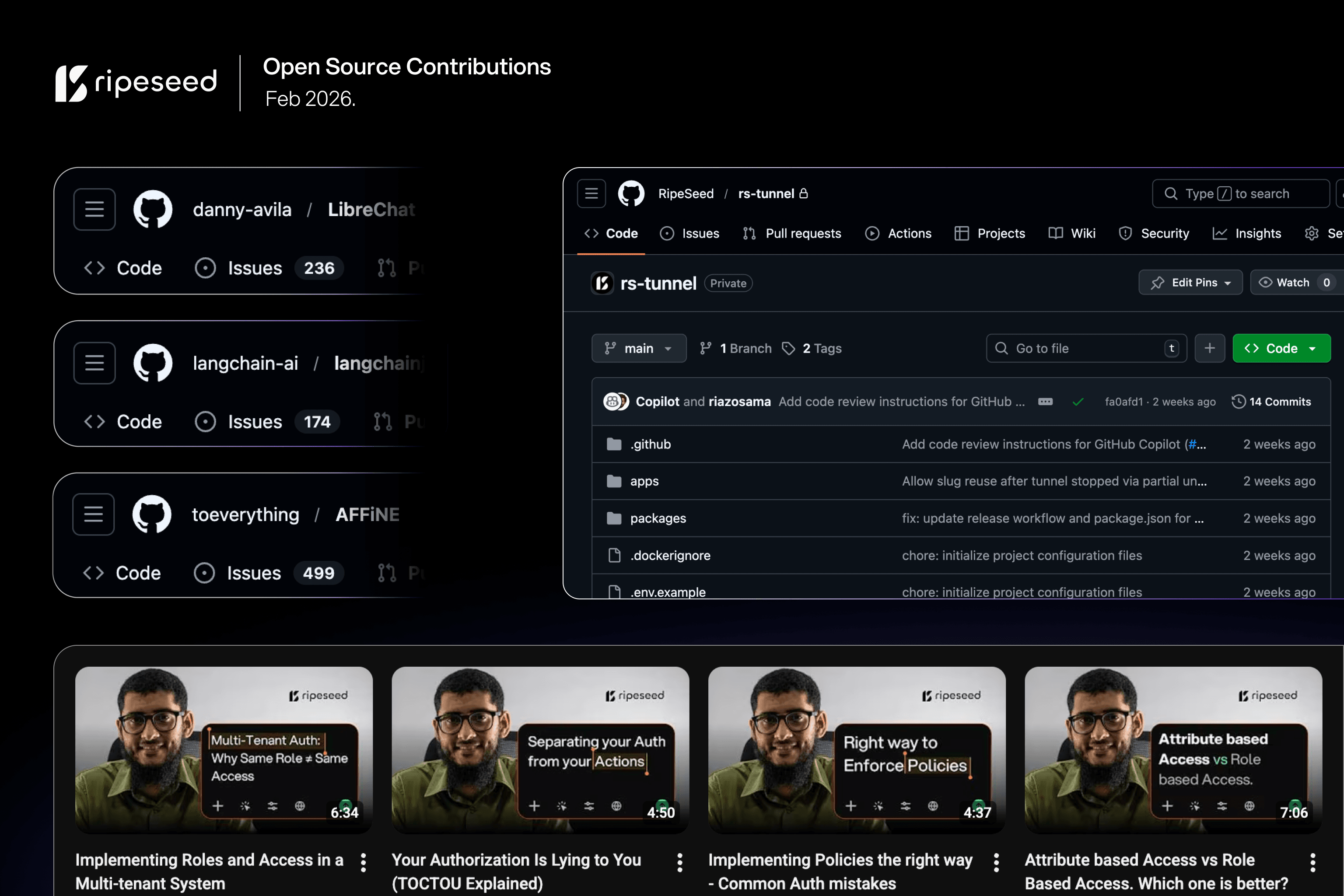
In February 2026, we continued pushing forward on the initiatives we started earlier this year.
We contributed even more actively to Open Source, launched another YouTube series, and across the team began experimenting more seriously with AI tools — trying to figure out the right way to integrate them into real engineering workflows.
February also saw major model releases from both OpenAI and Anthropic — Codex 5.3 and Claude Opus 4.6 — and the improvements are honestly remarkable. These models are incredibly good at understanding prompts, conducting research autonomously, and deciding when to operate agentically versus when to retrieve and use context.
Naturally, we had to put them to the test.
Over one weekend, I experimented with Codex by building a SpaceX Rocket Simulator, just to see how far the tooling could go when building something real from scratch. The result honestly blew my mind — not just because the simulator worked, but because of how effectively the model navigated the entire process: researching physics behaviors, structuring the application, and iterating through improvements.
You can play around with the simulator here, and I also shared a breakdown of the experiment on YouTube.
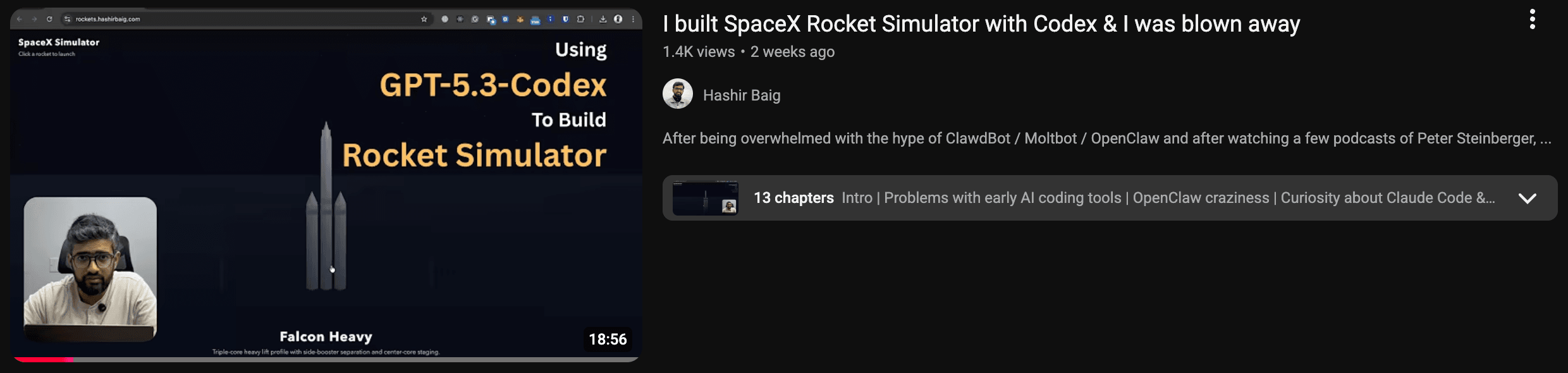
These kinds of experiments are helping us better understand where AI truly shines in engineering workflows — and where careful human oversight is still essential.
We'll be sharing more of these learnings over time.
Open Source Contributions this month
Continuing the trend from last month, we contributed to several more projects including LibreChat, AFFiNE, and LangChainJS. These contributions focused on improving developer experience, fixing edge cases, and removing small friction points that developers encounter while building with these tools.
LibreChat
In LibreChat, we modernized the "New Chat" navigation by replacing imperative routing with React Router's declarative Link component. This enables native browser behaviors such as middle-click and Ctrl/Cmd-click to open chats in new tabs.
We also adopted the Button asChild pattern, allowing styled buttons to be composed cleanly with navigation links. Together, these improvements enhance accessibility, improve user experience, and better align the interface with standard web navigation practices.
AFFiNE
In AFFiNE, we resolved dark mode printing issues where document content could become unreadable when printed.
By updating print-specific styles to enforce proper contrast and override theme-dependent colors, we ensured documents remain clear and professional regardless of the active UI theme. This improves reliability across different output mediums and prevents formatting surprises when exporting or printing documents.
LangChainJS
In LangChainJS, we addressed an inconsistency where PGVectorStore returned raw distance values instead of similarity scores, unlike other vector store implementations.
To resolve this, we introduced a configurable scoreNormalization option. This preserves backward compatibility while allowing developers to work with normalized similarity scores when needed. The change improves API consistency and reduces cognitive overhead when building vector search applications.
Launching Our Own Open Source Project: rs-tunnel
This month also marked a special milestone for our team. Osama, our Engineering Manager, built and open sourced a project called rs-tunnel — a lightweight alternative to tools like ngrok that allows developers to expose local servers to the internet for testing and development.
The project started from a very practical need while building integrations that required public webhooks during local development. Instead of relying on existing tools with limitations, Osama decided to experiment with building our own solution.
And that's how you got rs-tunnel. Feel free to try out at: https://github.com/RipeSeed/rs-tunnel
YouTube Series: Authentication & Access Management
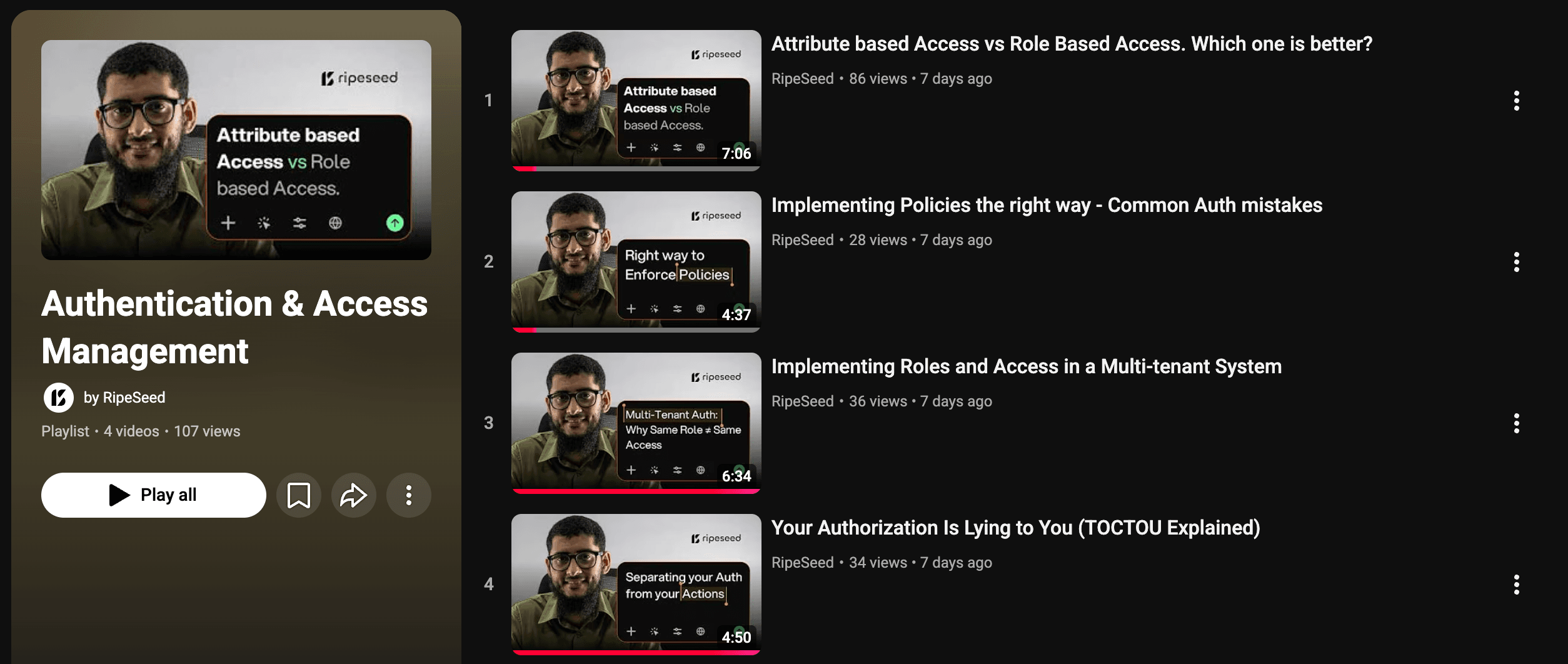
This month we also launched a new YouTube series led by Osama, where he breaks down one of the most commonly misunderstood areas of software architecture: authentication and authorization.
Having architected and launched multiple production systems for our customers, Osama walks through the real-world decisions that go into designing secure access systems — the things that are often missed when teams only follow basic tutorials.
The series covers topics such as:
-
Attribute‑based access vs role‑based access
-
Common mistakes when implementing authorization policies
-
Designing access control in multi‑tenant systems
-
Subtle security pitfalls like TOCTOU (time‑of‑check vs time‑of‑use)
Rather than focusing on theory, the videos focus on practical system design lessons that engineers run into while building real products.
You can watch the full series here:
https://www.youtube.com/playlist?list=PL3X0YtvGfTkEKDcIUJeaKL3KZO-O7LRBd
We'll continue expanding this series as we document the patterns, mistakes, and architectural decisions that shape real-world software systems.
At RipeSeed, we believe great engineering teams should not only build products, but also contribute back to the ecosystem and share what they learn along the way. February was another step in that direction, and we're excited to keep building, experimenting, and contributing in the months ahead.